
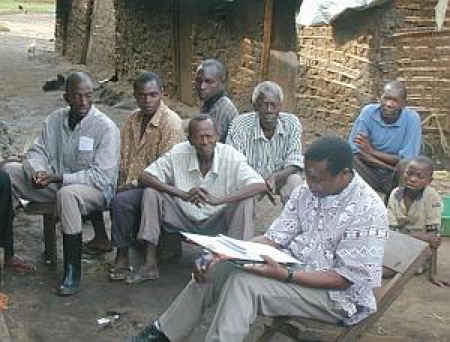
Checking the Lubwisi translation
Mulindi, a speaker of the Lubwisi language in Uganda, attended church for 50 years before he heard a Bible verse read in his own language. “People used to say that no one would manage to write the Bible in Lubwisi because it is an unwritable language,” he said.
But then someone did write the language. They chose symbols for an alphabet that fit the Lubwisi language, and they began writing stories and books, including HIV/AIDS materials that benefitted their people greatly. They even created an online dictionary.
Most importantly, they translated the Bible. At the end of July 2016, the Lubwisi people will celebrate the arrival of the New Testament in their language.
Mulinda says, “I am like the old man Simeon in the Bible whom the Holy Spirit promised would not die without seeing the Messiah. God has given me a time of grace in this world so that I can hear the Word of God in my own language, the language which I understand.”
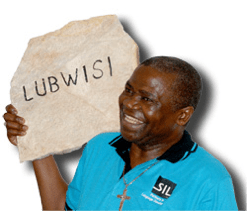 In March 2015, Ugandan people speaking four different languages — Lubwisi, Lugungu, Lugwere, and Lunyole — gathered to celebrate the completion of New Testament drafts into each of these languages, the languages of their birth, their mother tongues.
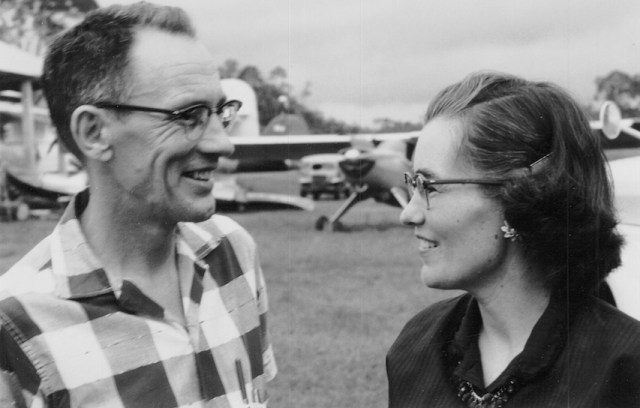 Evelyn, who loved her family and friends deeply, and gave herself completely to a cause she cared so much about, entered into the presence of Christ, the one who defied, defeated and destroyed death, on June 3. She was 101.
 Translation advisor, Bob Ulfers, and his Karang-speaking colleague, Jacob, had come to the village of Zefatu in Cameroon to test the translation of 2 Thessalonians into the Karang language. But as they approached the isolated chapel at the top of the hill (see the photo), Bob wondered if anyone would show up to help.
 Studying the Bible in a language you’re not very familiar with complicates understanding and could compromise the message. The




 Bob Creson